A producers’ collaborative
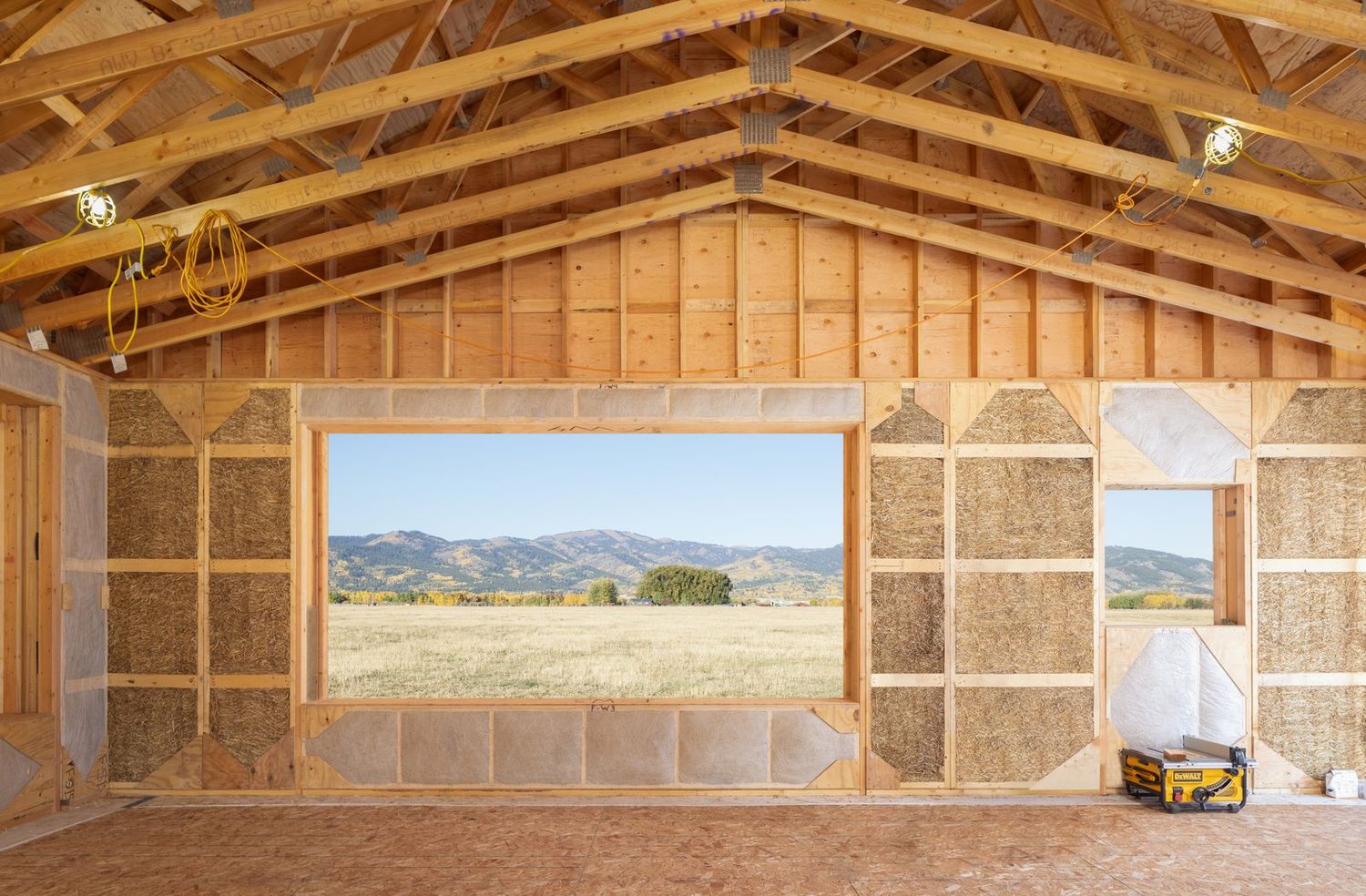
Straw wall panels, made near the place you’re building
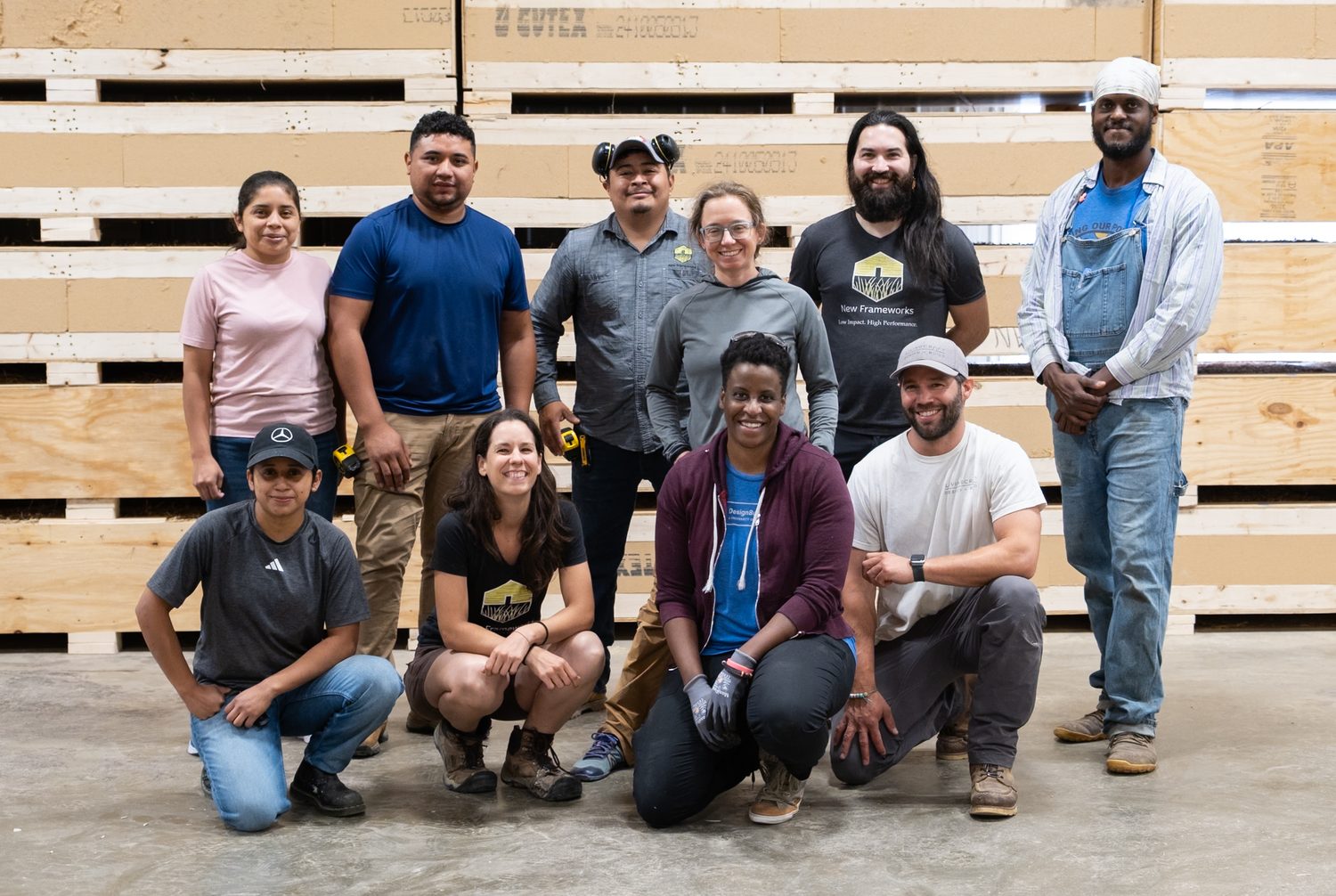
We are a network of straw panel manufacturers, designers, and installers who chose collaboration over competition — because it gets more healthy, low-carbon homes built, in more places, by the people who live there.

What we’re for
Making straw construction ordinary
Spread far enough and fast enough that a straw wall becomes a normal thing to put up in a normal town, made by the people who live there.
We are not the only ones doing this work, and we are glad we are not. We intend to get there without exploiting the people who build, the farms we buy from, or the land it all stands on.
There is no patent on this, and no one owns the practice. Members fund the Collaborative between them, and it belongs to them. Beyond that, we ask of each other what we ask of ourselves: that the detailing is right and the wall is built properly — something our founders have spent their careers building, researching, and refining.
Find your way in
Where would you like to start?
The panels
Dimensions, R-values, weight, engineering routes, durability, and what raising them involves on site.
SpecificationsThe manufacturers
Who makes the panels, where they are, and which regions are coming online next.
The networkPre-designed homes
Start from a plan somebody has already built, and have it made by the manufacturer nearest you.
See the modelsMaking panels yourself
The Seed Program, what starting a shop takes, and the architects’ and builders’ circles.
Join the networkOur commitments
Six things every member does
Not principles on a wall. These are the terms of belonging, and each one shows up in what arrives on your site.
We refuse the trade-off between low carbon and high performance.
We build to the drawing, exactly.
We treat the trades as skilled work, and pay accordingly.
We buy from farms and mills close to the shop.
We teach the method, because it was taught to us.
What one manufacturer learns, every manufacturer gets.
Manufacturers active today, in Vermont, Massachusetts, and Missouri.
More manufacturers setting up, from Maryland to Washington State.
Panel thickness, giving an R-38 wall assembly.
Method, held in common and passed between manufacturers through the Seed Program.
What we make
A wall that arrives already insulated
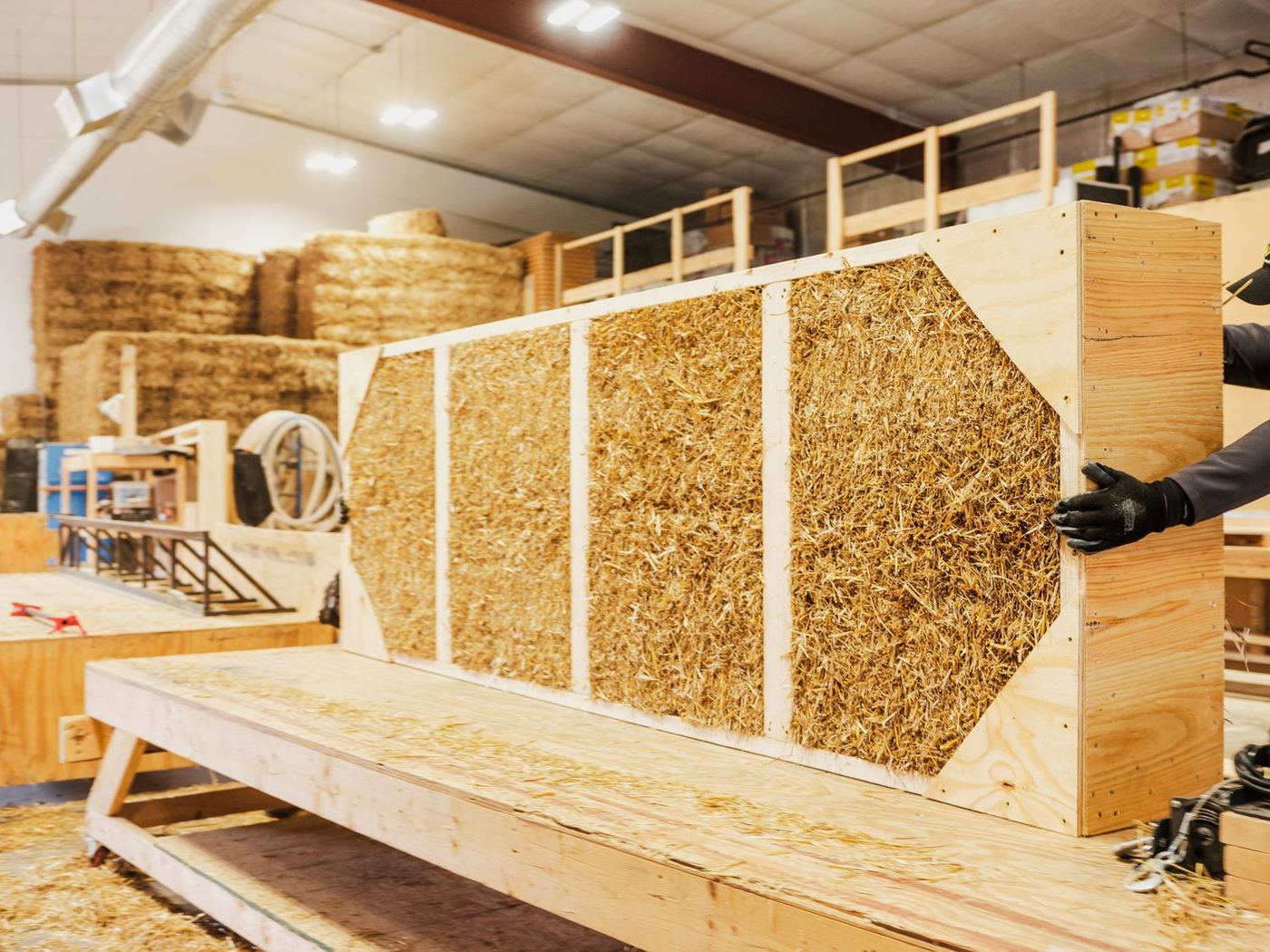
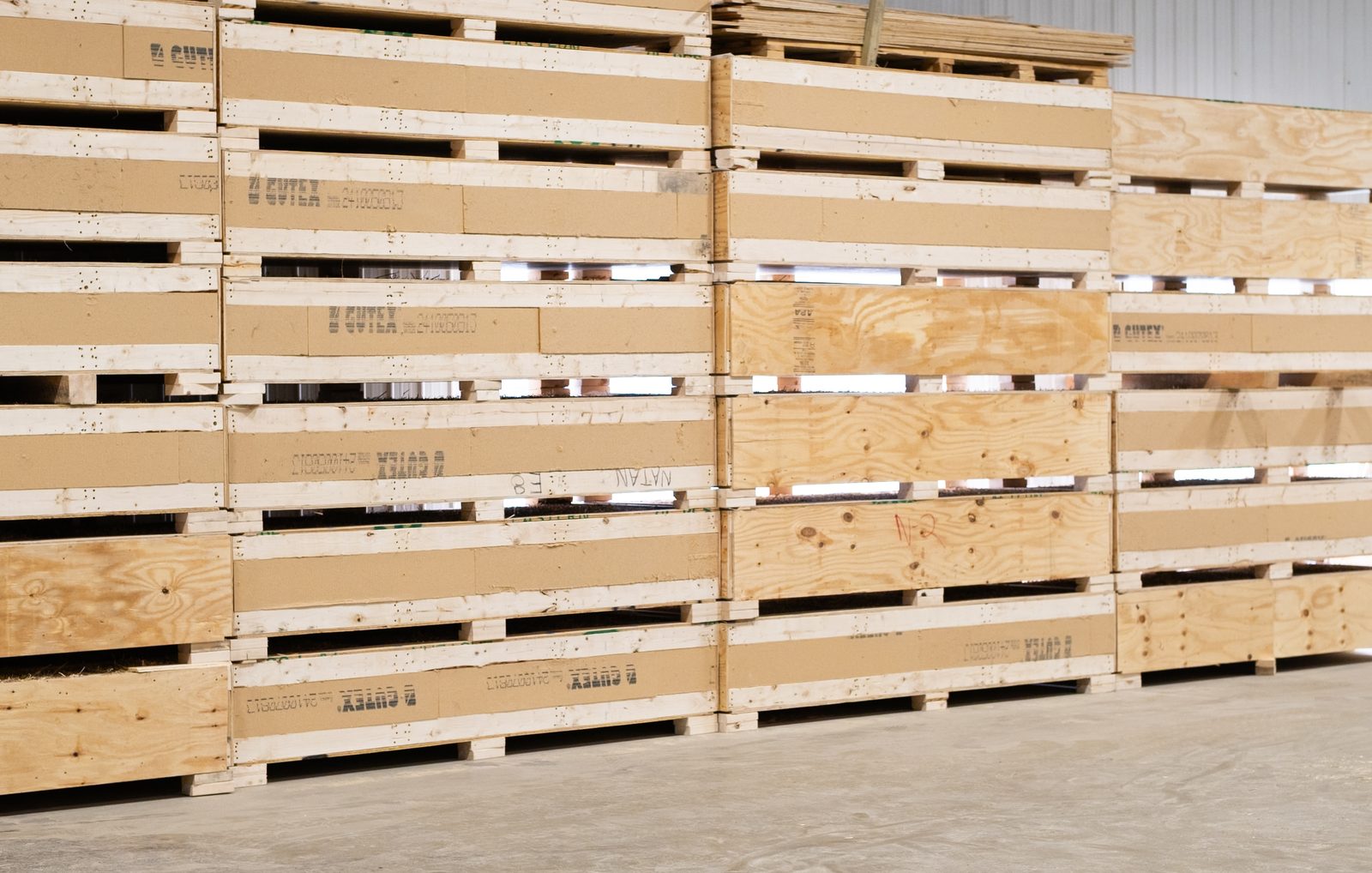
Straw from nearby farms, pressed into prefabricated wall panels at 14.5 inches thick for an R-38 assembly. Structure and insulation arrive as one component, built indoors to your drawings and delivered stacked in the order the walls go up — no bales stacked by hand, no specialist crew required.
The straw drew carbon out of the air while it grew. Built into a wall and kept dry, it stays there for the life of the building.
- 14.5″thickness
- R-38wall assembly
- 350 lbstandard panel
How the network works
A network, not a franchise
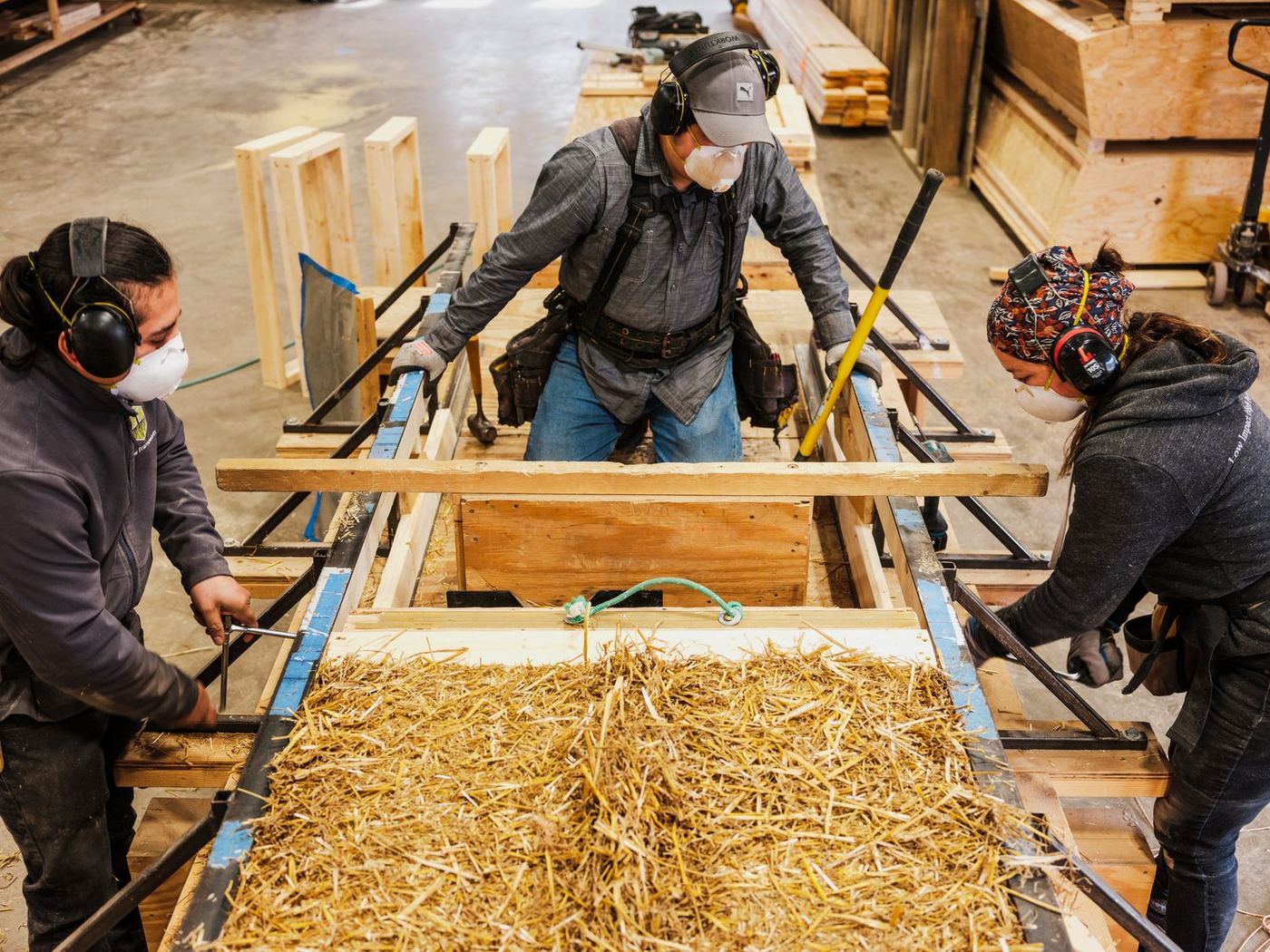
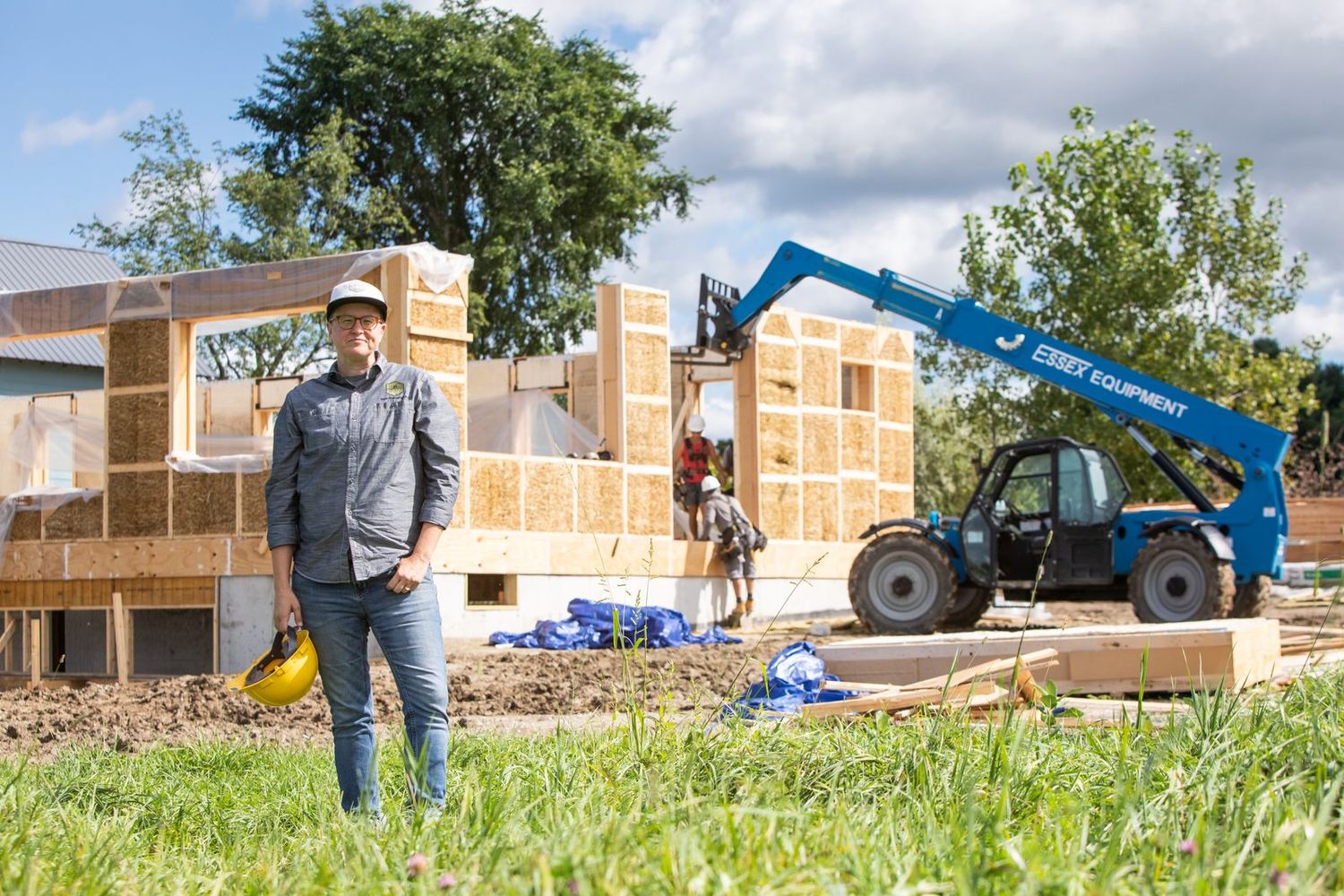
New Frameworks spent nearly two decades in natural building before turning entirely to prefabricated straw panels — and kept the fabrication deliberately simple, so that everyday carpenters could build it rather than a production line. Then they began teaching it, through the Seed Program.
Every manufacturer in the Collaborative came through that training, and every manufacturer still owns itself. Its own name, its own crew, its own region. What they hold together is the method and everything learned since: monthly calls, shared research, design worked through in company rather than alone.
Which is the whole point. A problem solved once in Vermont should not have to be solved again in Colorado, and a technique this useful should not depend on any one company staying in business.
How to buy
One door, several manufacturers
The Collaborative doesn’t run a factory. Our members do, and each serves the projects within reach of its own workshop. Straw panels are heavy, and shipping a wall across the country would undo a good part of what makes it worth building. So the answer isn’t one big plant — it’s several independent manufacturers, each close to the work. Which leaves one question worth answering for you.
- Tell us where you’re building.
Location, rough size, and where the project is up to. A sketch is enough to start. - We point you to the nearest manufacturer.
Based on haul distance, capacity, and what your project actually needs. - You work with that manufacturer directly.
They quote it, build it, and deliver it. We stay in reach if you want a second pair of eyes on the detailing. - Nobody nearby yet?
We’ll tell you straight, and talk through the options — including helping a manufacturer near you become one.
Next step
Tell us where you’re building.
A single home, a small development, or a project still on the back of an envelope — we’ll talk it through and connect you with the manufacturer closest to your site.